
Estimated, packed, volumetric: the one a carrier charges for
A parcel has three weights before anyone is billed. Here is where each comes from, which one wins, and what actually moves it.

Three weights before anybody is billed
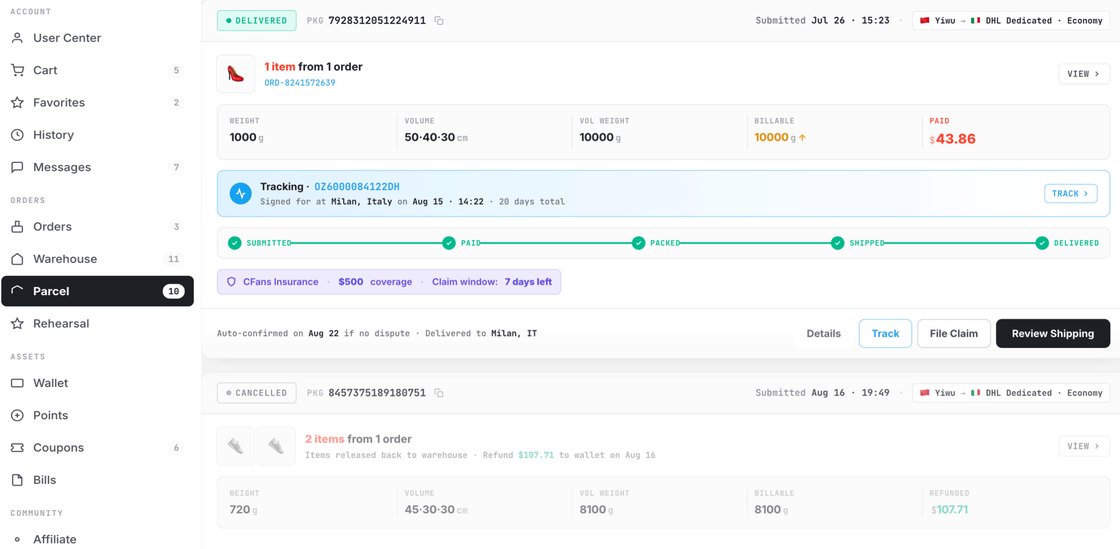
A single parcel carries three different weights before anybody is billed, and reading the wrong one is how people end up surprised at the route picker.
- Estimated weight
- A working figure from before the final packing. It includes whatever packaging the item had when it was shelved, which is why it moves when you choose to strip packaging off at the parcel stage.
- Packed weight
- What the finished parcel reads on the warehouse scale, packaging included. Published as the figure settled against your deposit.
- Volumetric weight
- The box converted into grams. Published formula: length times width times height in centimetres, times a thousand, divided by eight thousand, with the note that the divisor can differ by shipping method.
Carriers price the greater of the last two. Everything on this page is about making sure the one that wins is the one you expected.
The arithmetic, with the agent's own example
The published worked example uses a parcel of forty-two by fifty-six by twenty-nine centimetres weighing three kilograms. Multiplied out and divided by eight thousand that is 8,526 grams of volume, and the published rounding rule pushes any fraction up to the next hundred, so it becomes 8,600.
Three thousand grams on the scale against 8,600 from the box: the box wins by nearly three times, and the parcel is priced as if it held almost nine kilograms.
Two details in that rule do real work. The divisor is written as commonly eight thousand rather than always, so a different route can convert the same box differently. And rounding happens upward to the next hundred grams, which means a box one millimetre over a threshold costs the same as one a centimetre over.
Where the deposit moves
What you pay at the route stage is a deposit worked out from the estimated weight, the chosen method and the destination. The real figure arrives after packing and weighing.
The published settlement is two-sided. If the real cost is higher by more than a small margin you are asked to top up before dispatch; if it is lower, the difference goes back to the account after shipping. Minor differences may be absorbed rather than invoiced, which is as close as the published text comes to naming a tolerance.
Levers that actually move the number
- Measure all three outside dimensions. In a hypothetical 40 × 30 × 20 cm carton, reducing height by 2 cm removes 2,400 cm³; reducing length by 2 cm removes 1,200 cm³. That helps identify where a repack may matter, but only if the goods and necessary protection still fit.
- Compression, where it is allowed. Vacuum extraction is sold for exactly this and is published as unsuitable for anything that must hold its shape, for sensitive electronics, liquids and sharp objects.
- Shoe boxes. Refolding flat is a per-item service with a published side effect: the item stops being eligible for after-sales once it is done.
- Dense additions. Adding denim or accessories can raise the scale weight without reducing the box’s existing volume charge. It does not make freight disappear and increases the goods you buy. Compare the total basket and parcel cost rather than adding unwanted items just to make the scale weight exceed the volumetric figure.
- Splitting. The published note for parcels with no available route is that oversized or overfull boxes should be split, and the same logic applies to a box the conversion is punishing.
Run your own box through the calculators, then read routes and delivery for what the picker does with the result.