
Four judgements nobody else will make for you
Four separate judgements, each with a short checklist built from what the agent publishes about its own limits.

Reading a seller while the goods are still theirs
The agent buys what you point at. Nothing in the published process second-guesses the seller, and the inspection that follows is an appearance check rather than a verdict, so the seller choice is the one decision nobody else will make for you.
- Read the specification menu, not the title. Option lists on marketplace listings routinely carry things the photograph does not show: a different model, an accessory, a gift box, or a second product entirely.
- Check what the listing says about gifts. The published inspection rule is that a gift is verified only if the listing states it; where nothing is stated, nothing is checked.
- Treat sold counts and stock numbers as seller-typed text. They are fields, not audited figures.
- On bulk-trade listings, look for the minimum order. The published warnings for that marketplace name minimum quantities, supplier delays and differences between batches.
- If the listing hides its own photographs behind an auction, a lucky-bag format or obscured images, expect the published consequence: details cannot be verified in advance, so inspection is limited to what can be seen.
Choosing which listing to point at
Three published facts do most of the work here. Sizing is not standardised across sellers, so the agent's own advice is to measure and compare rather than to trust a label. Colour differences and size deviations are outside the inspection scope, so they will not support a return. And electronics are checked from the outside only.
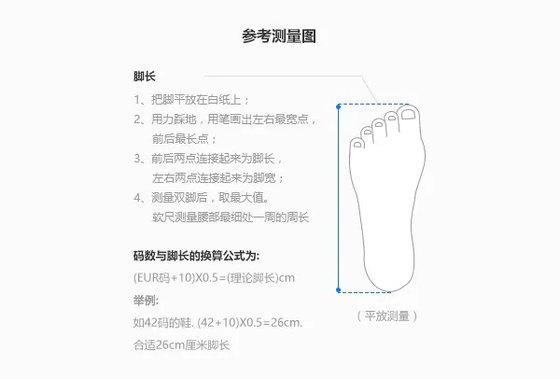
Which turns item choice into a short checklist: measure yourself first, allow the one to three centimetres the help centre allows for, prefer listings whose photographs show the thing rather than a render, and expect nothing from the inspection beyond what a careful person could see on a table.
Sizing up an agent before the first deposit
Choosing an agent is mostly about four answers you can find before you deposit anything. Shopping agents are not interchangeable, and the differences that matter are rarely the ones on the home page. Four questions separate them, and all four can be answered from published pages before you deposit anything.
- Whether the company behind it is named anywhere
- Company names and addresses should be printed somewhere. This agent prints two companies, one registered in Hong Kong and one in the United Kingdom, under headings that do not make the division of labour obvious.
- Are the fees written down anywhere binding
- An agreement that states a percentage is more useful than a landing page that promises none. Where the two disagree, as they do here, the checkout total is the only answer.
- How long will they hold goods, and what happens at the end
- Storage length, renewal price and the disposal rule should all be findable. Here they are, although the length is published as two different numbers.
- What does the inspection actually commit to
- Photograph counts and an explicit list of exclusions are worth more than the word professional. Three to five photographs and a named exclusion list is a real answer.
Other shopping agents run the same basic machine: a warehouse address, a purchase on your behalf, photographs, consolidation and a carrier. Judge them on those four answers rather than on which one a video told you about, and read the agreement of whichever one you pick, because the numbers live there rather than in the marketing.
Cases where somebody else suits better
Why CFans rather than one of the others comes down to those same four answers. Honest answer first: if you want a verdict on authenticity, no agent in this category gives one, and this one says so in writing twice. If that is what you need, buy domestically.
Beyond that, two cases argue for looking elsewhere. If you need a published tariff before you commit, this agent will not give you one without an account, and some competitors publish rate tables openly. And if you expect to return things often, a five-day window counted in hours from shelving is tighter than the fortnight some domestic shops give you.
The cases where it suits: consolidating several sellers into one parcel, buying from marketplaces that do not ship abroad at all, and anything where a photograph before dispatch is worth more than speed.
Testing any guide, including this one
How to judge a Spreadsheet site is the same exercise with smaller stakes. Browsing catalogues and guide sites in this corner of the internet are mostly thin, and the tells are consistent. Apply them here as readily as anywhere else.
- Look for dates on facts. A fee or a storage window with no date attached is a copy of something, and the original may be years old.
- Look for contradictions being named rather than smoothed over. Any site that tells you the storage window is exactly one number has not read both pages.
- Click two outbound links. Dead links mean nobody has looked at the page since it was generated.
- Check whether the pictures are the agent's own or stock photography. Screenshots of real screens are harder to stage and more useful to read.
- See whether the site admits what it cannot test. Route prices behind a sign-in cannot be quoted, and a site that quotes them anyway is inventing them.
By those standards this site is honest about its limits: everything here was read on the agent's own pages on one day, that day is printed, the contradictions are left standing, and the figures nobody can see without an account are named as unavailable rather than guessed.
- Who writes this Names, method and the referral disclosure.
- What changed Dated notes when something moves.
- Help desk The short answers.